


Biotin: simply bio-tiful
Wonderful hair – that's what the beauty vitamin Biotin stands for, by the way, it's the B vitamin with the number 7 (Vitamin B7). Biotin is needed for the metabolism of the three macronutrients: carbohydrates, fats, and proteins. The latter are essential for what happens on your head. Did you know that proteins are indispensable for your hair? Just like nails and skin, your glorious hair consists of approximately 80% of the fibrous protein keratin, which can only be produced with the help of Biotin. Furthermore, Biotin supports various enzymatic processes in the hair follicles, which contribute significantly to maintaining healthy hair. Bye-bye, Bad Hair Day! Biotin is not called the “beauty vitamin” for nothing, as it is also of great importance for your skin, in addition to your hair. This is also where another nickname comes from: Vitamin H (for Hair and Haut – German for skin).

Truly elemental: what Biotin can do
Biotin is not only elemental for skin and hair, but as a true all-rounder, it is involved in many bodily functions. For example, it is essential for normal psychological function and the normal functioning of the nervous system, so that nothing can easily disturb your peace of mind. Your mood and even your hair will benefit from this, as stress is one of the biggest factors for hair loss – more on that later. As a coenzyme, Biotin is needed for many enzymatic reactions, for instance, in cell division, an important process for the growth and regeneration of hair follicles, which are essential for healthy hair. Because the beauty vitamin is important for metabolising all three macronutrients, your body can use it to convert food components into valuable energy. This talented vitamin is also crucial for the synthesis of fatty acids, which are needed for cell membrane formation in addition to energy production. However, its most important role for your hair remains the aforementioned role in protein metabolism, supporting the conversion of amino acids into proteins.

L-Cysteine & Silicon: Building Blocks for Dream Hair
Under the scalp, new keratin cells are constantly being formed with the help of Biotin. The part of the hair that is visible from the outside and is commonly referred to as "hair" is called the "hair shaft". It is also known as a "horny strand" because the newly formed cells stick together and keratinise. New cells are continuously added to the strand from below, pushing it out of the skin. What isn't immediately obvious are the diligent hair roots that produce the keratin cells. In addition to Biotin, there are other important nutrients that directly or indirectly influence the quality of your developing hair. Proteins (like the already mentioned hair building block keratin) are always made up of chains of amino acids. A component of keratin is the sulphur-containing amino acid L-Cysteine. It forms sulphur bridges that give hair strength and ensure it can withstand external resistance such as dry heating air, sun exposure, and stormy conditions. When your hair is whipped around in the wind, its structure can be stressed, leading to annoying hair breakage. To support your dream look, we should also mention Silicon. This element naturally occurs in hair and skin and is involved in the formation of collagen. While collagen is primarily known as a beauty tip for the skin, it is also an important protein for beautiful hair.

Hair-fectly Right: Selenium & Zinc
The essential trace elements Selenium and Zinc stand by your side as powerful antioxidants. They help the cells of your hair and scalp resist so-called oxidative stress, which can be triggered from within or externally. Reasons for tearing your hair out and thus triggers of oxidative stress include, for example, many to-dos and strenuous periods of life. A weakened immune system is also a stress test that can become noticeable on your head. Luckily, Selenium and Zinc actively support the function of the immune system! External stress can include, for example, your favourite styling, because chemicals used during bleaching and colouring or the heated use of curling irons and straighteners can weaken the hair structure and break down proteins in the hair shaft. The result: split ends, dryness, and hair breakage. That's why you should also use heat sparingly when blow-drying. Tight hair ties are also no reason for your hair to rejoice, as they can rough up the hair structure. And then there are countless environmental influences: sun, air pollution, wind, salt water, or chlorine can damage hair and make it look straw-like. For all these strains, Selenium and Zinc can actively support you.
Eat Your Way to Beauty: Biotin-Rich Foods & More
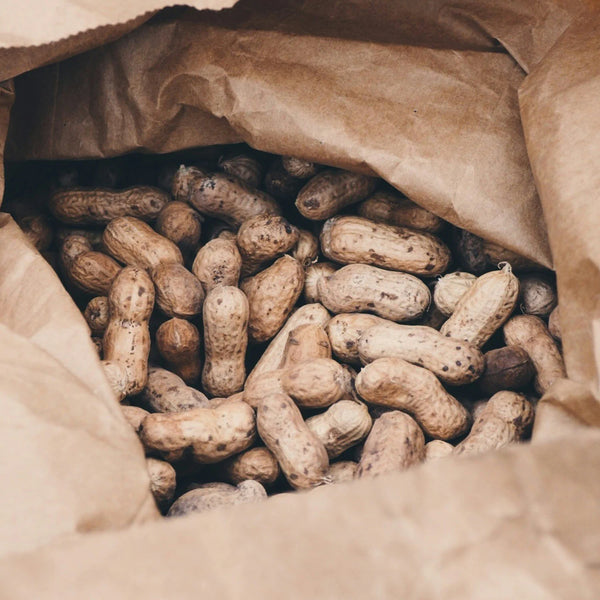
"Eating your head off" was yesterday's news: after all, there's a whole range of foods on the menu to provide you with valuable hair vitamins. Among the best Biotin-rich foods are peanuts, hazelnuts, and cashews. And even if you have to forgo nuts due to an allergy, there are plenty of alternatives: mushrooms, oats, carp, cod, and the popular breakfast egg also contain higher amounts of the beauty vitamin. B vitamins, like Biotin, contribute to protein metabolism and are found mainly in animal products, but also in whole grains and legumes. To treat your hair with antioxidants, you can opt for Brazil nuts, broccoli, cabbage and onion vegetables, and eggs, as they are particularly rich in Selenium. Your Zinc balance can be effectively improved with liver, chickpeas, lentils, and Emmentaler cheese. Vitamin C is also a hair-loving antioxidant, especially abundant in fruits and vegetables like peppers and kale, blackcurrants, and citrus fruits. Beauty can taste so good!
Hair Growth and Hair Loss
Have you ever wondered where new hair is formed? The lower end of the hair root, the hair bulb, extends into a well-vascularised nodule, the dermal papilla. New hair roots can also form in it if they are ever pulled out. New hair cells, consisting mainly of keratin, are constantly forming between the papilla and the bulb. Water makes up another 10 to 15% and the rest are pigments, minerals, and lipids (fats). We have approximately 5 million hairs – each one grows by about 0.3 to 0.4 millimetres daily, which amounts to 1 to 1.5 centimetres per month. It's not inherently negative that hair falls out some time after it forms (more precisely: after up to 7 years). Normally, we lose about 50 to 100 hairs day by day. However, there are factors that cause us to lose even more hair. The most common reason: hereditary hair loss. Men, in particular, struggle with thinning hair – among those under 30, 30% are already affected. In women, hormonal changes due to pregnancy or menopause can leave hair-raising traces.
To fulfil your hair dreams, you can fully rely on Biotin- and hair vitamin-rich foods. Additionally, supplements can offer you nutrients in higher doses – whether as capsules, tablets, or sweet Biotin gummies, yummy! With our hair vitamins, you're prepared for any hair-lenge: here, Biotin meets Zinc, Keratin, Silicon, Selenium, and L-Cysteine, among others. Hair-mazing!


